

How To Draw A Horses Eye
The following is a full step by step tutorial on How to Draw a Horse with Colored Pencils past artist Carrie L. Lewis. Y'all can learn more than almost her in the bio section at the finish of this drawing lesson.
Colored Pencil Drawing Tutorial – Palomino Arabian Colt – Direct Drawing Method
8×ten Original Colored Pencil on Rising Stonehenge, 90 lb., Natural
The field of study of this portrait is a yearling filly. She'south an Arabian that has the typical Arabian "wait" and a unique color. The lighting was good and colour saturation on the photograph was likewise proficient. The icing on the cake was that I had the opportunity to observe this beautiful equus caballus. Personal observation provides a little flake more information for drawings than working solely from pictures.
The method I used for this cartoon was the direct method. I also chose a colored paper that provides a base for both the filly and the background in lodge to reduce the amount of drawing fourth dimension necessary.
Unless otherwise stated, all the pencil I used are Prismacolor Thick Lead pencils. Colour names are for those pencils and may vary depending on the brand you lot apply.
The Reference Photo
The starting time pace for any cartoon or painting is preparing the reference photo. I put a grid over the office of the photograph I want to depict using photograph processing software. When I'chiliad finished, my reference photo looks like this.
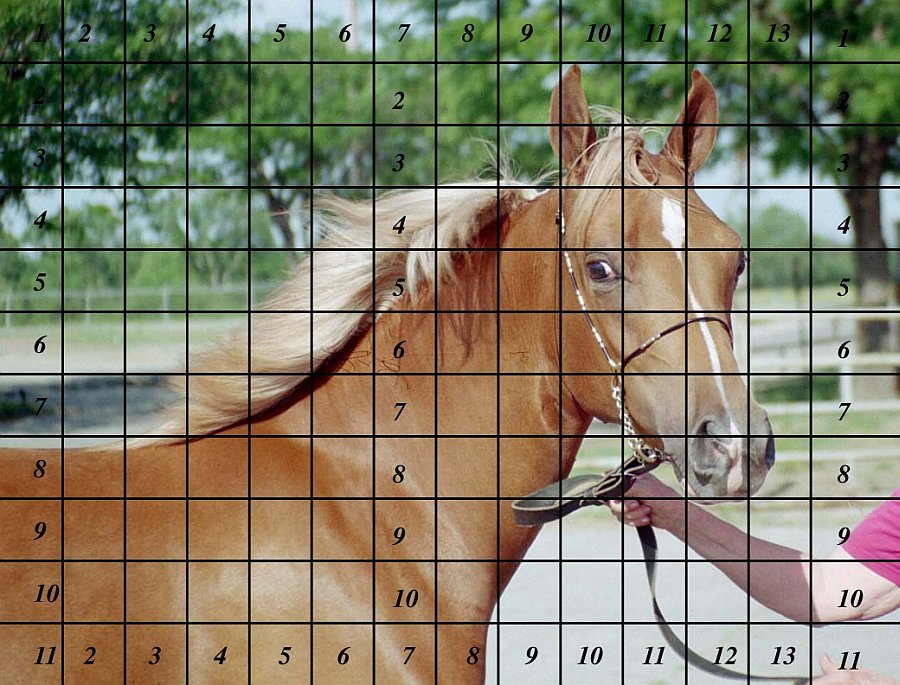
I also impress a filigree on newspaper at full size if the drawing volition exist eight-1/ii 10 fourteen or smaller, as this one is. For larger drawings I either print a filigree on regular printer newspaper and enlarge the finished line drawing or hand depict a full size filigree. Since I'chiliad non naturally a technical creative person, I prefer the first of those two methods.
The Drawing
The colored pencil drawing passes through several revisions, as shown below, beginning with a rough drawing on the grid.
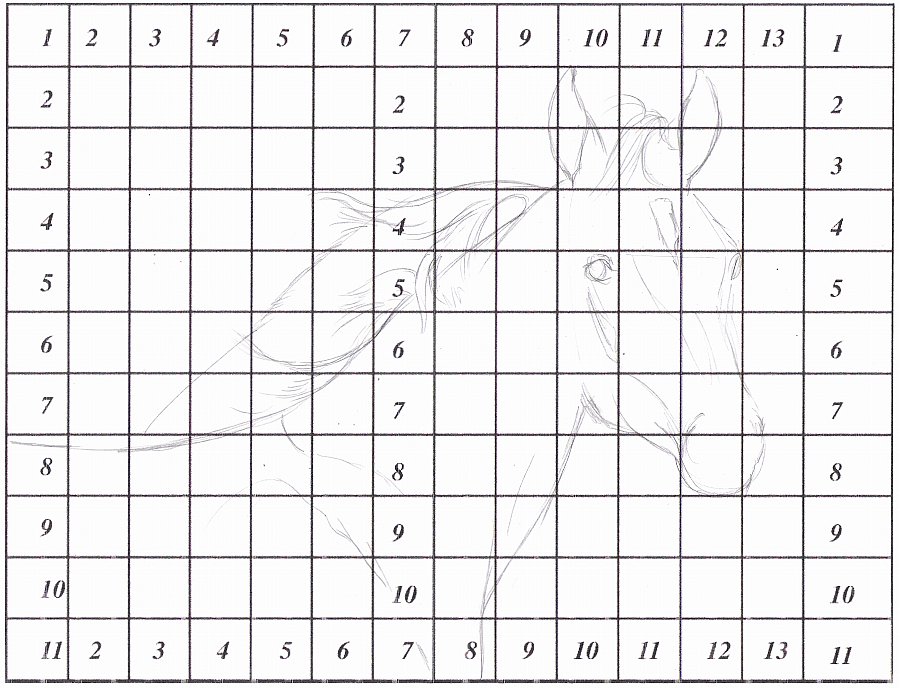
The crude cartoon is then refined on the gridded newspaper. It may have only a day or two to reach this point (as with this cartoon) or information technology may take a week, depending on the size and complexity of the drawing.
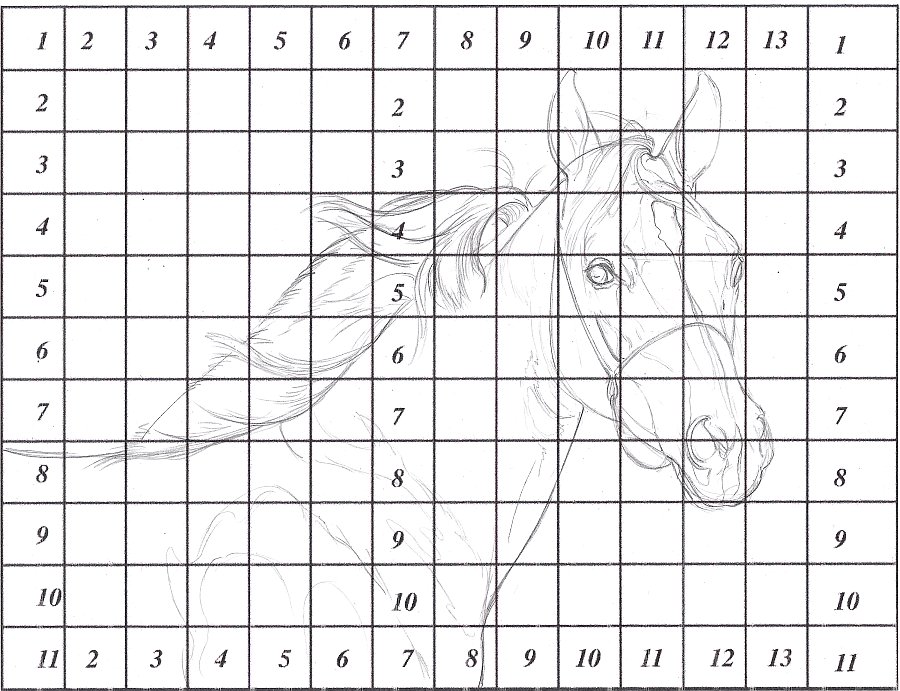
When the drawing has advanced as much as possible with the use of the grid, I transfer it to tracing newspaper and redraw information technology. I make changes and corrections throughout this procedure, refining the cartoon, increasing the level of detail, and making the cartoon as accurate as possible.
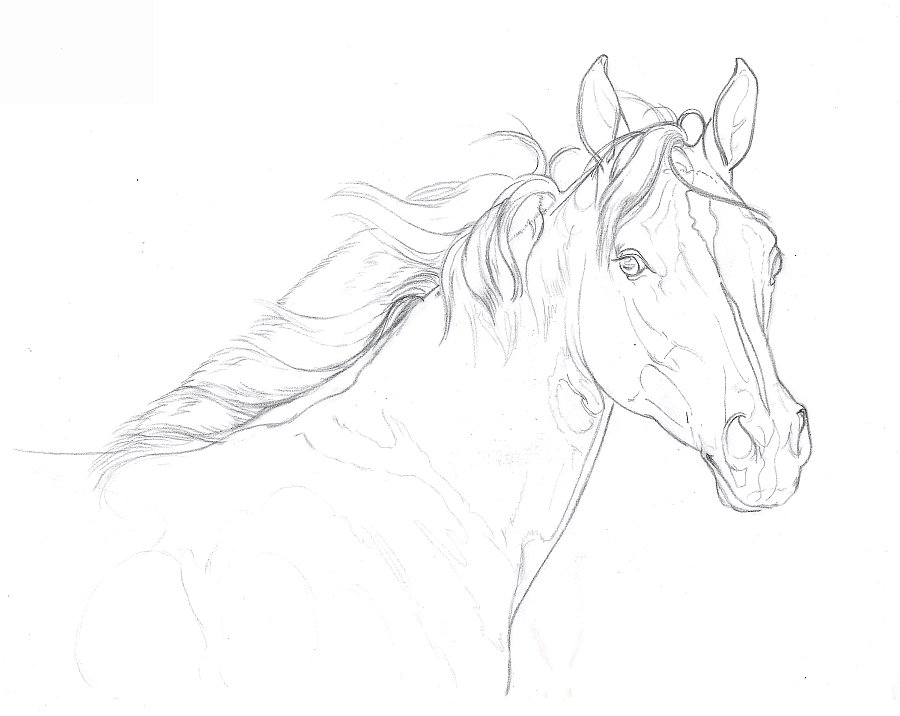
The next step is making a reverse drawing. I plow the tracing newspaper over and redraw the cartoon from the back. Once again, I make corrections and adjustments. I also flip the reference photo on the computer. I repeat this process until the drawing is every bit correct equally possible from both sides (forepart and back).
The reason for this is that I draw with a natural right-handed bias. Working on a opposite image of the cartoon and from a reversed reference photograph helps correct that bias.
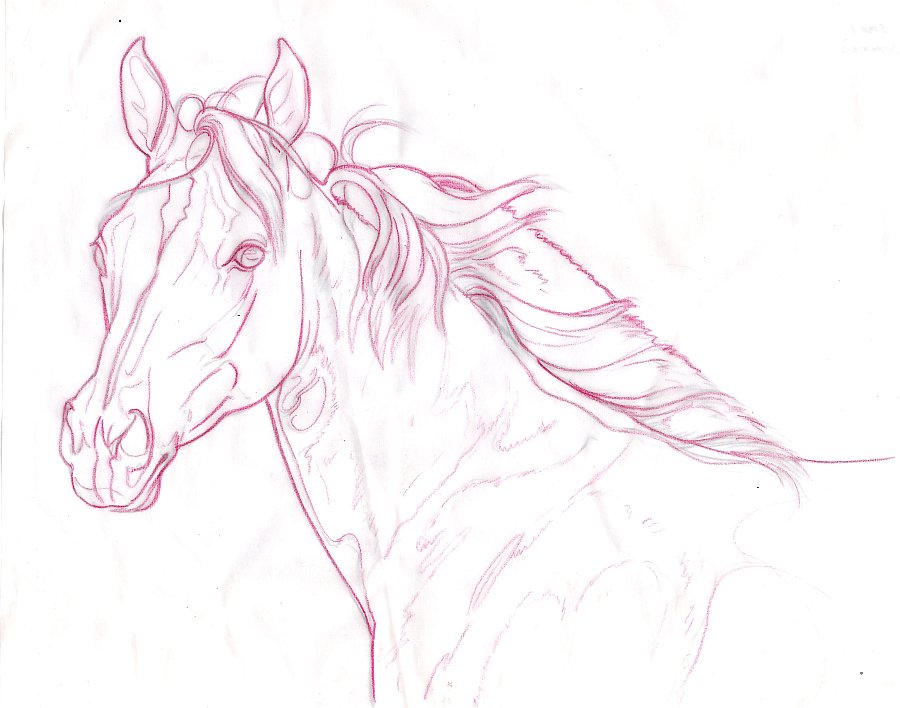
A final circular of revisions and corrections on the forepart and the drawing is ready to be transferred to the art paper.
Color Work
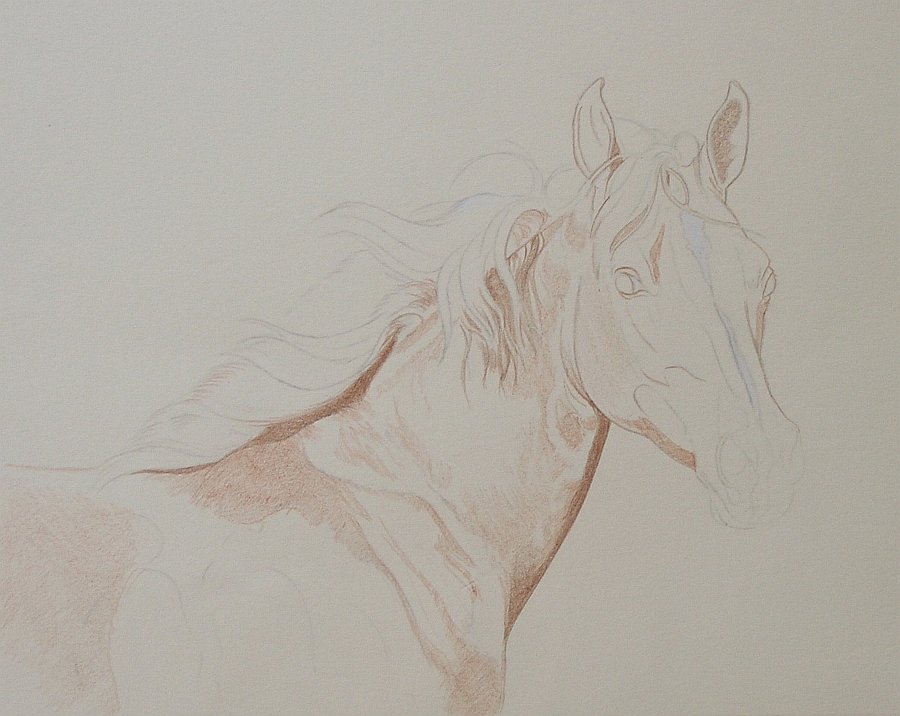
Stride ane
This is a limited palette work, so I selected the appropriate pencils at the beginning. Colors ranged from Cream and White for light colors to Sienna Brown for the darkest color.
I'm using a direct method of color application, so when I began color work, I matched the pencils every bit closely as possible to the shades on the reference photo. Shadows were outlined, and so shaded with Sienna Brown, followed by Burnt Ochre in the middle tones.
In some areas, I applied colour fairly heavily and used the pencil held upright, with a blunt tip, and tight, round strokes to become an even color layer.
In other areas, I used a sharp indicate and applied color in the direction of hair growth with brusk, well-baked strokes. I didn't do anything with the highlights because the paper color closely approximates the color of most of the highlights. They will announced equally darker colors are applied effectually them, so I outlined and worked around them.
I used White on the blaze.
Step ii
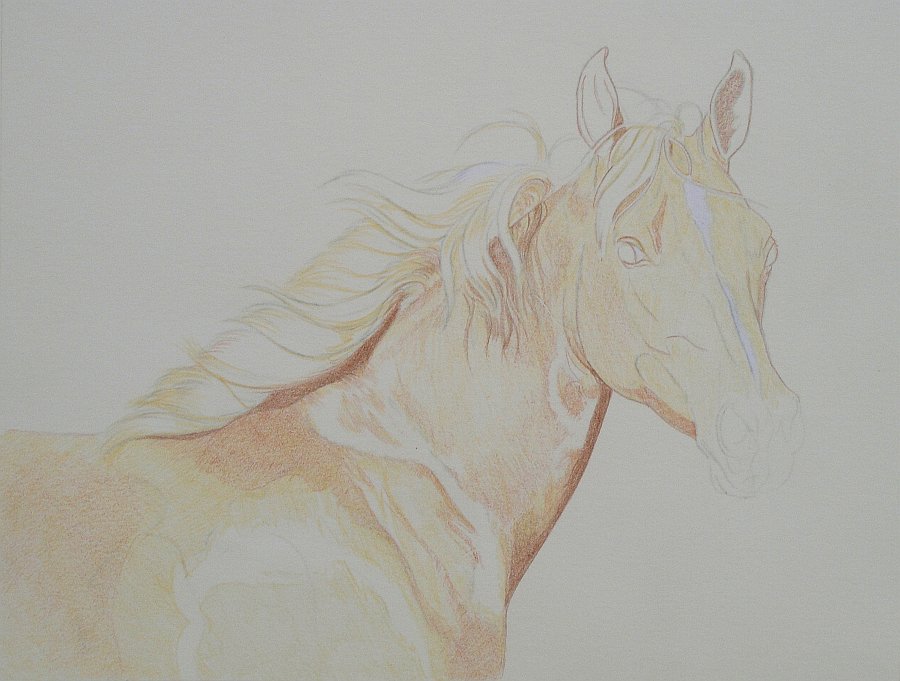
I glazed Sand over all parts of the colt except the bonfire, brightest highlights, and the areas within the ears and effectually the muzzle. I started with a sharp pencil, but connected to employ it as the tip blunted, working with directional and circular strokes property the pencil upright and with directional strokes applied with the side of the pencil.
When I finished the body, I add together a second layer of Sand in the shadows of the mane and forelock.
Step 3
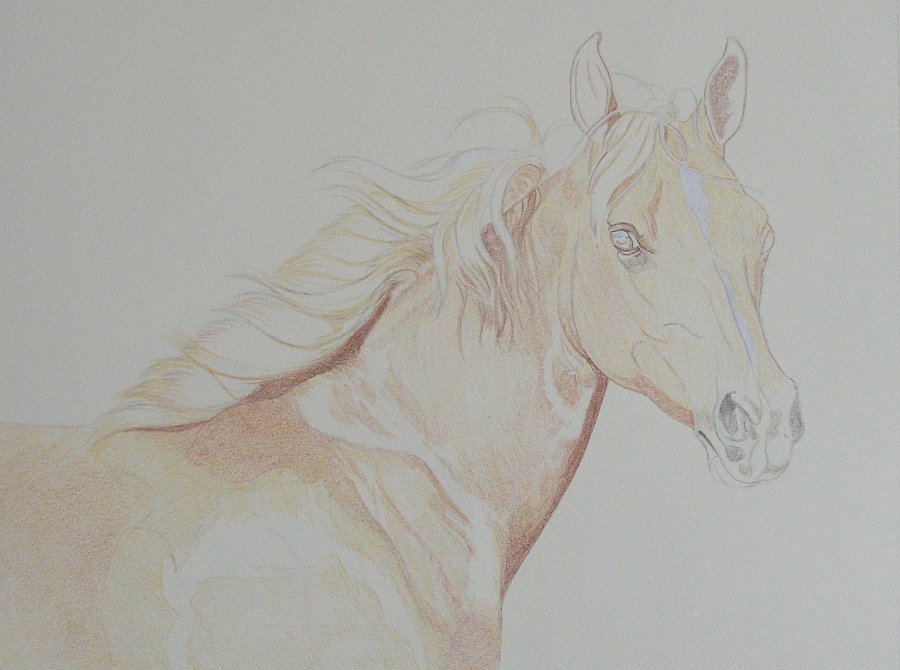
With the bones color in place, I began piece of work on the eyes and muzzle, outlining each area with French Grayness l% in order to establish the lights and darks and the shapes of otherwise vague areas. Colors I used were Black, Peacock Blue, Dark Umber, Burnt Ochre, French Gray 50%. I kept my pencils very sharp to define details and to cover the newspaper equally completely as possible with minimal pressure.
At this stage in this lesson on How to Draw a Horse with Colored Pencils, I use medium pressure level or less, oftentimes working with such lite force per unit area that it's difficult to run across in a photograph or scan. Information technology's much easier to make corrections if color is lightly practical. Working on multiple, lite layers likewise allows me to go on refining and correcting the image equally I add color.
Step four
I darkened the heart to bring out the highlight and reflected blues, and then worked on the lids and the surrounding face by layering Sienna Brown, Burnt Ochre, and Sand in the shadows and centre tones, especially effectually the head.
All of the work was done with abrupt pencils and brusque strokes, usually in the management of either hair growth or body contours. In the jowl and a couple other areas, I cross hatched.
I too impressed a few flyaway hairs around the caput and face up using my favorite impressing tool, an former Zebra ball point pen with no ink and a fine bespeak.
I layered Yellow Ochre over all of the horse, including the muzzle and parts of the mane. The only areas I worked around were the blaze and the brightest highlights on the face, neck and shoulder.
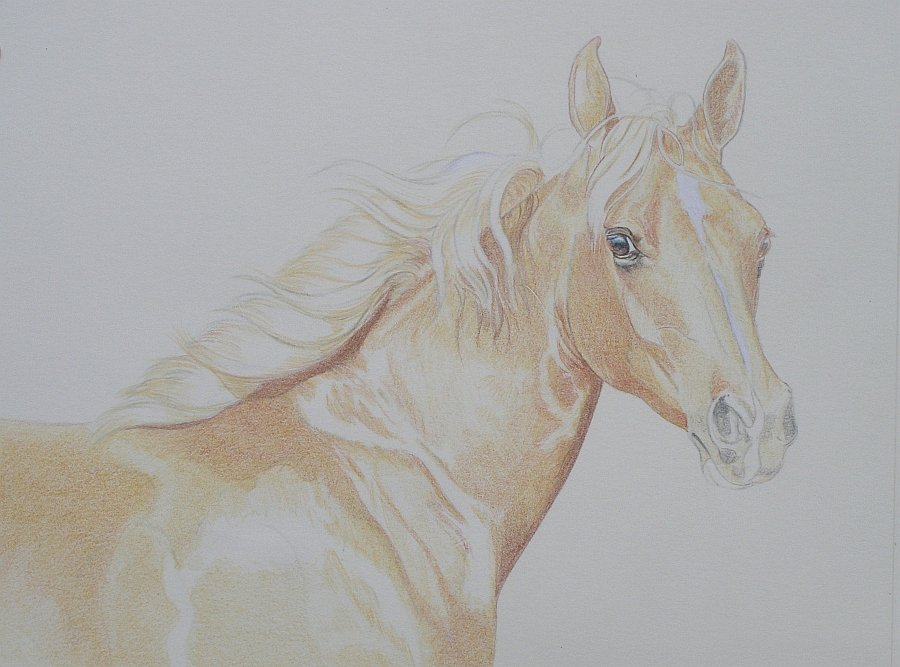
Step 5
Get-go with the offside ear, I began defining shadows and heart tones with Sienna Dark-brown. I outlined the bolder shadows, then filled them in. For the shadows with softer lines, I either outlined them very lightly (the left side of the upper blaze) or shaded very lightly to an undefined border (the right side of the upper blaze.
I used pressure of ii to iii (on a scale of 0 to 10) and sharpened my pencil often.
For the shadow inside the offside ear, I layered Yellow Chartreuse to see what bear on a yellow-dark-green had on the tone of the colour. At that place was some change, just not as much every bit is called for.
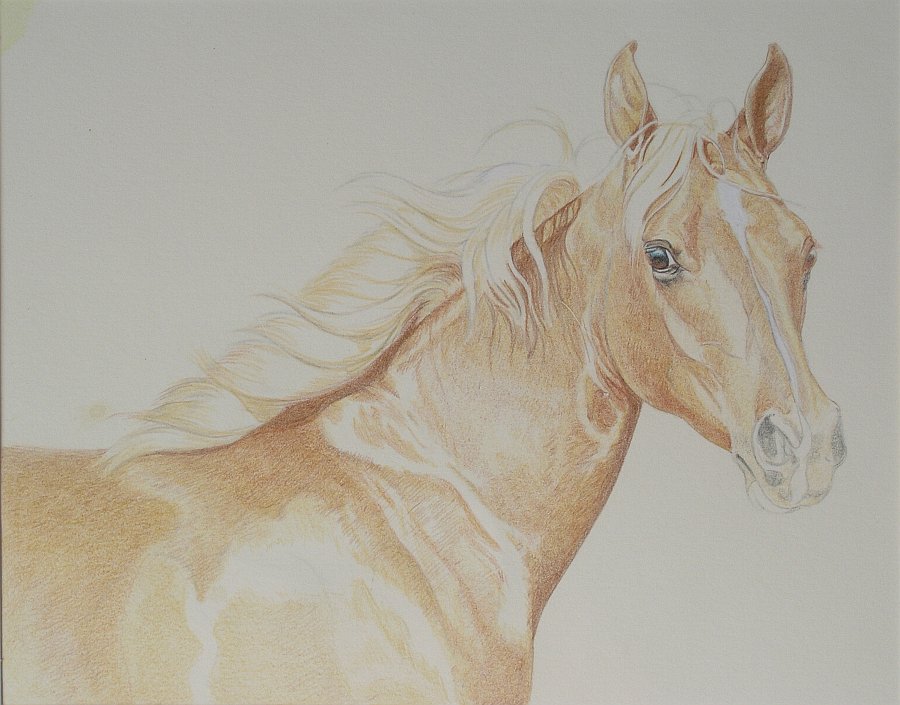
Pace six
I wanted the appearance of blurred leaf for the background. Something to complement the filly's coat colour without overpowering her. I began with a layer of Limepeel hatched and cross-hatched in brusque, parallel, diagonal strokes. I besides used horizontal, vertical and round strokes. Edges were random on undefined from the start. Lights and darks were established in a totally random pattern based on the number of layers of Limepeel. The more layers, the darker the value. Since I used light pressure, none of the values were very dark.
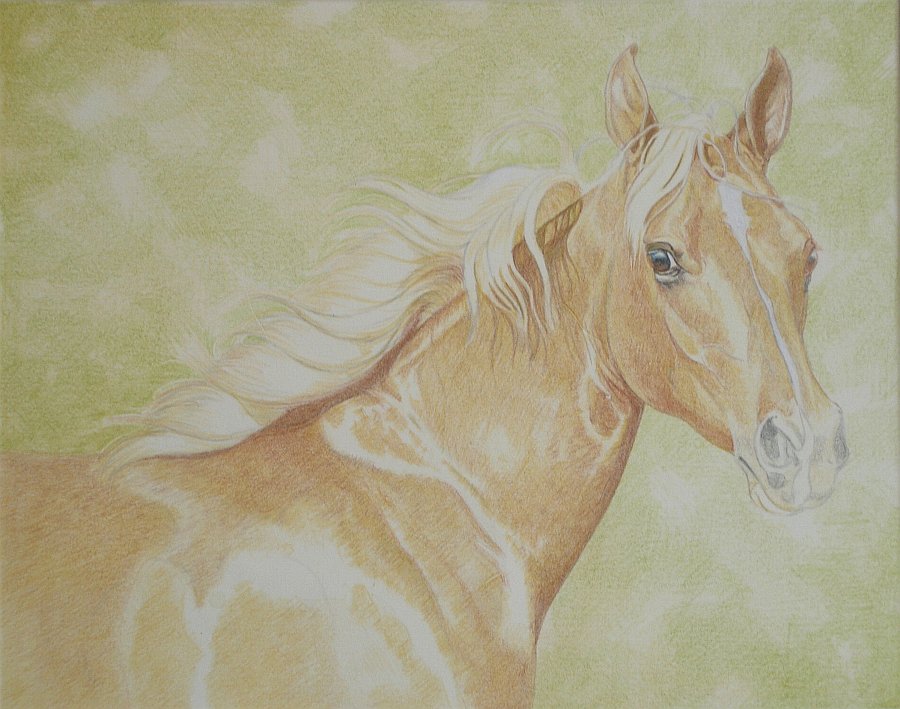
Step 7
The next color was True Blue, which I applied with a diverseness of strokes throughout the groundwork. Non Photo Bluish was next layered over most of the background.
The addition of darker colors made the mane popular, only I couldn't get a decent alloy. So I worked over it with Faber-Castell Art Grip Light Blue. That color was a shade or 2 darker than Non Photograph and it was much dryer (less wax binder). The resulting color was darker and smoother. I worked in several directions with this color, fifty-fifty doing some shading forth the edges in an attempt to even out the color.
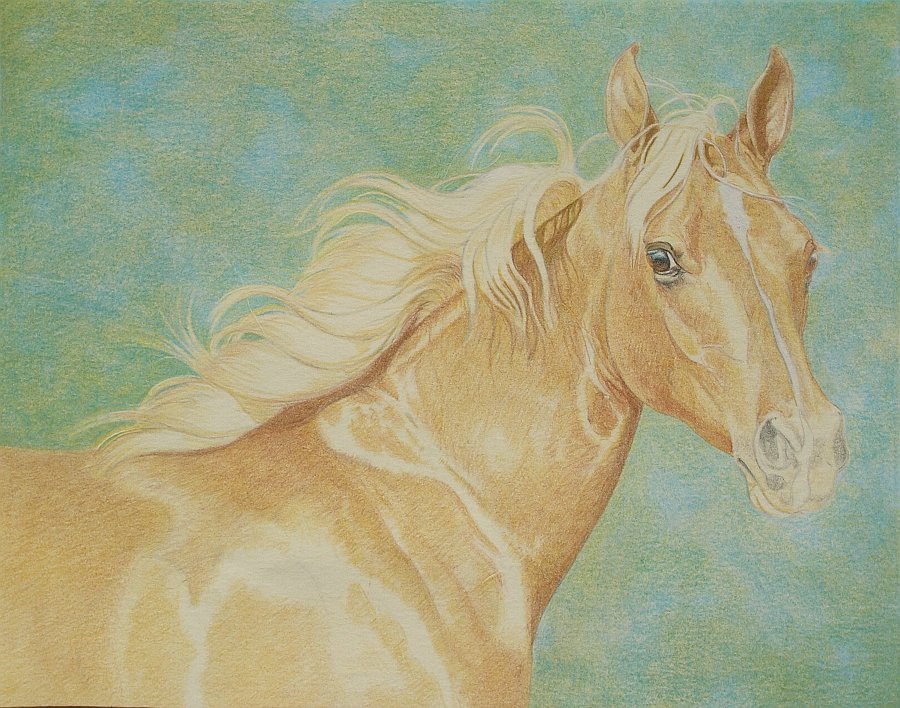
Stride 8
Because greens can become very bold very fast, I side by side layered Calorie-free Umber over the background. I used low-cal pressure to apply 2 layers of opposing diagonal strokes in a random pattern.
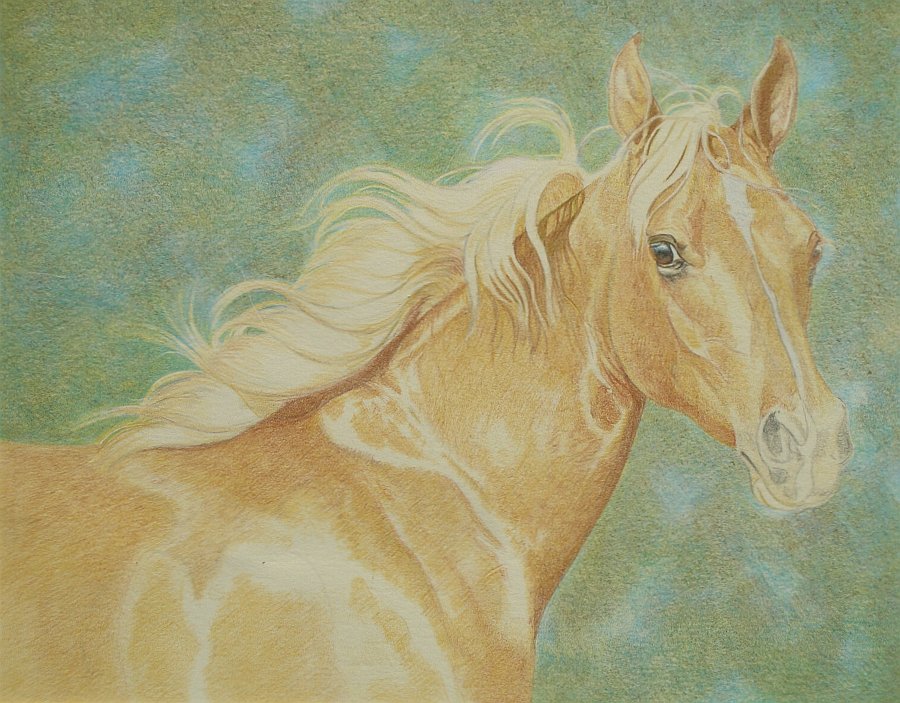
There isn't much difference between this illustration and the previous illustration, but calculation Light Umber did create a more natural green.
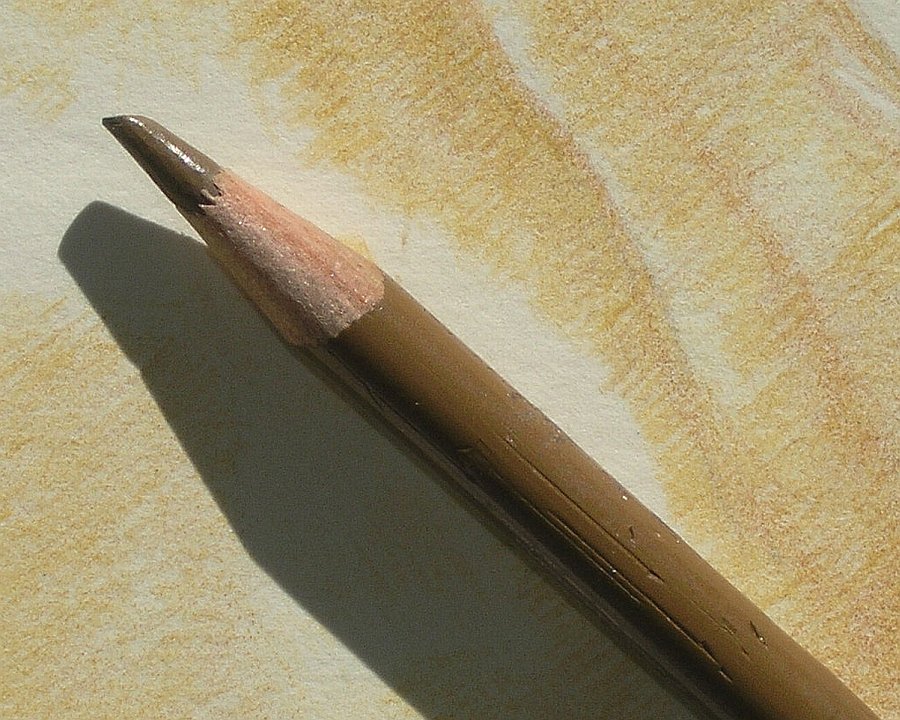
I also used a blunt tip, as you can see below. The tip of this pencil has two surfaces. The 'long' side, which you can run into on the pencil itself, and a short side, which is visible in the pencil's shadow. Between these two edges, I was able to apply broader, less sharply defined strokes and to create the 'soft focus' look I want for the background.
Notice the slanted side of the pencil itself and the edgeless edge of the pencil's shadow. Those are two different edges. Making use of both of them aided in creating the wait I wanted with a minimum of effort.
Step 9
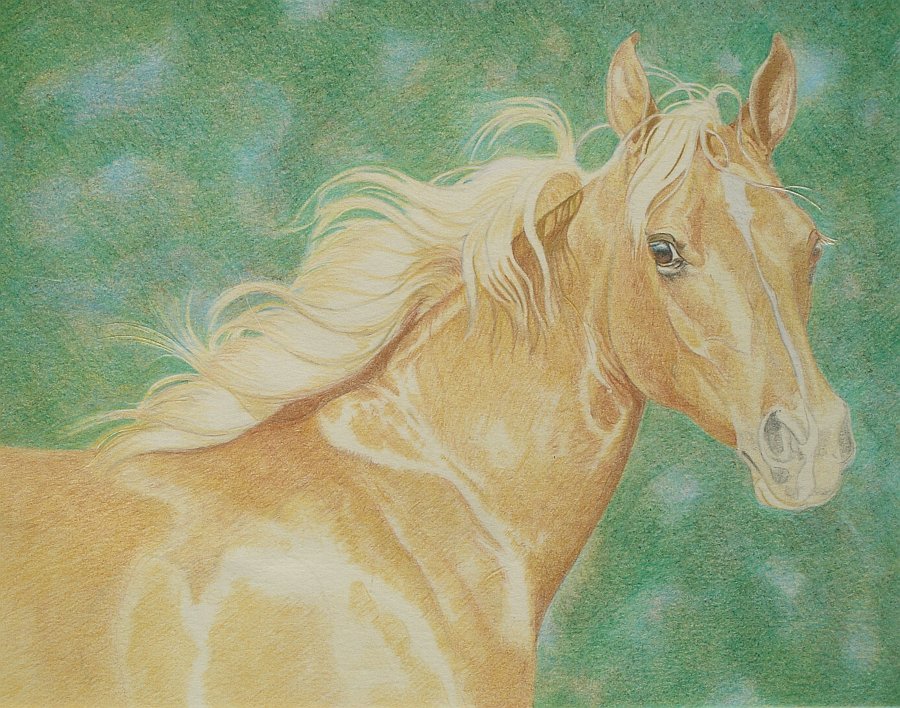
Next, a few layers of Grass Greenish.
The only way these layers differed from what I did with Low-cal Umber in the previous layers was that I worked more carefully around the filly. I as well used circular strokes in some areas and I sharpened the pencil in one case or twice to get better coverage and a more fifty-fifty layer of color.
Footstep 10
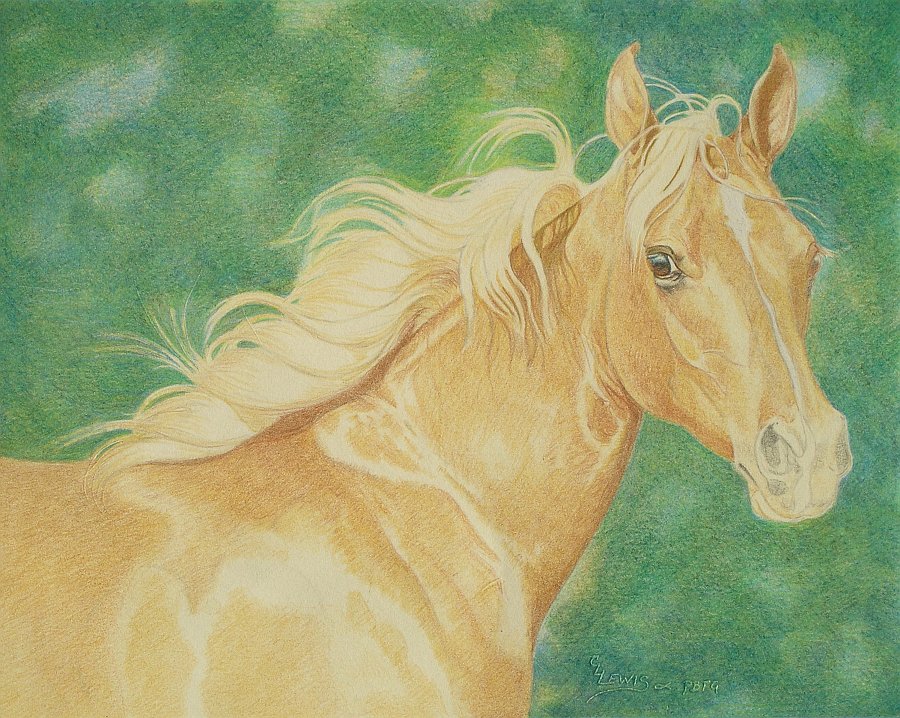
I next layered Yellow Chartreuse over the tiptop one-half of the background and Copenhagen Blue over the lesser half. The purpose of using two colors was to begin creating a cooler, darker lower background with a warmer, lighter upper background, thus creating a piffling bit of pictorial depth without adding a lot of detail.
I applied each color with a variety of strokes ranging from hatching and crosshatching to tight circular strokes. I used medium pressure for both colors and kept the pencils equally precipitous as possible.
Next, I glazed Copenhagen Blue over all of the groundwork, followed past another layer of Yellow Chartreuse. I finished with a final layer of Yellow Chartreuse applied with a blunt point and medium heavy pressure level over the summit half.
Pace 11
The greens were withal a niggling besides bold, and so I layered Tuscan Red over most of the background. To create brighter color and focus attention on the colt'south face, I didn't tone downwards the greens around her ears or most the off side eye. I used medium low-cal pressure (handwriting pressure level) and a sharp pencil. I also worked primarily in diagonal crosshatching strokes.
Finishing piece of work on the background began with Peacock Green and Yellow Ochre and a colorless blender (as well by Prismacolor). Using heavy pressure, I applied Peacock Dark-green or Xanthous Ochre in each expanse. In some areas, I layered colors; glazing Peacock Green commencement and burnishing with Yellow Ochre or glazing with Yellow Ochre and burnishing with Peacock Greenish. Since the burnishing color affects the overall color, I was able to create subtle gradations in color depending on the color I used for burnishing.
I burnished all of the background with the colorless blender, so added a terminal coat of Peacock Green to finish information technology. The portion of the groundwork that is finished is the lower one-half in this illustration. The top half all the same needs the final burnishing.
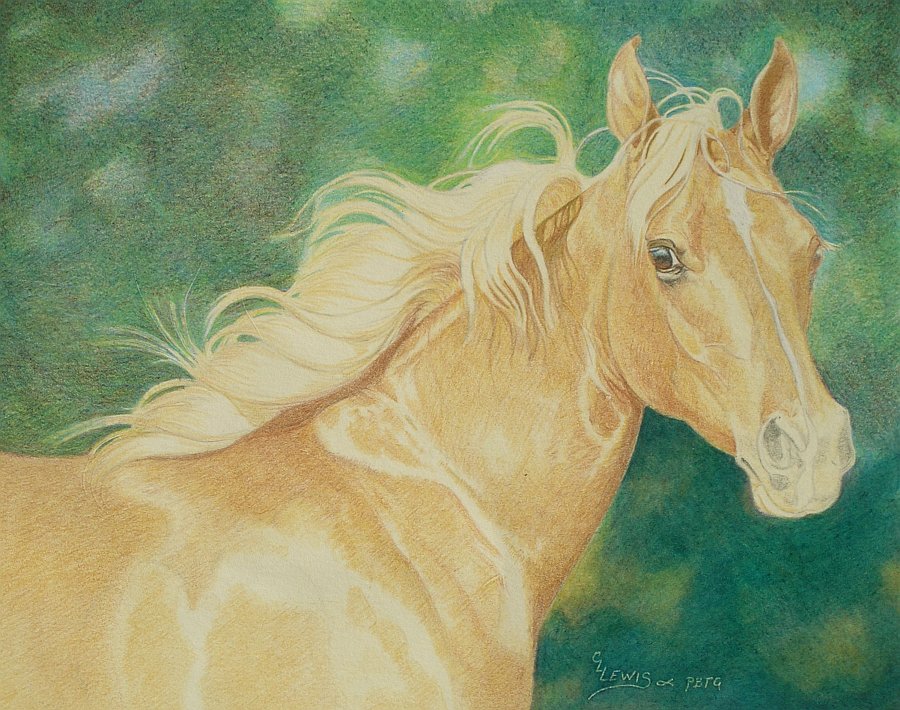
Step 12
I connected layering and burnishing Peacock Light-green and Yellow Ochre throughout the background. I burnished each area with the colorless blender, and so used rubbing booze and a cotton swab to further blend and smooth the background.
Once the paper was dry, I touched up a couple remaining areas with Peacock Green using the side of a sharpened pencil and calorie-free force per unit area to blur some of the transitions that were too bold.
That was helpful merely didn't completely tone down the colors, so I layered Dark Greenish over much of the groundwork. In the areas I wanted to smooth out, I used the side of the pencil and low-cal pressure level. In other areas, particularly in the corners and the background effectually the mane, I used the tip of the pencil and heavier pressure level.
To end, I polished most of the background with a piece of paper towel folded two or three times.
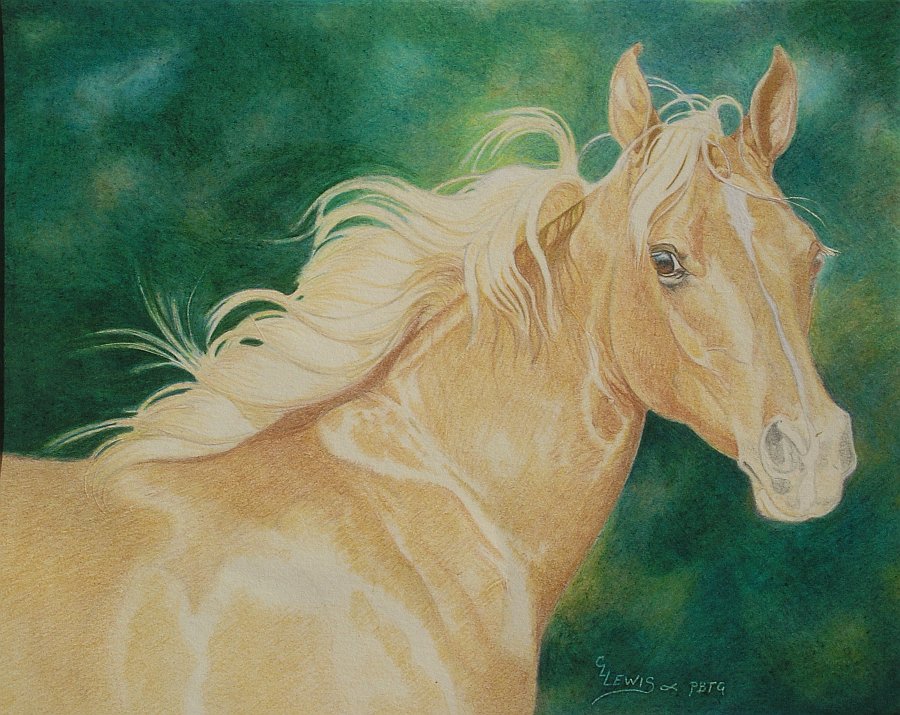
Step xiii
Next was finishing the horse.
Offset with the ears, I layered Terra Cotta into the shadows and darker mid tones. The reference (which I enlarged and viewed on the computer) showed a lot of red tones in the shadows of the mane, so I layered Terra Cotta into those areas, too.
Well defined shadows within the ears, under the mane, under the jowl were outlined with a sharp pencil and light force per unit area. I too adjusted contours where necessary.
Those shapes were then filled in with a sharp pencil and short, closely spaced strokes. In about areas, I used a combination of strokes to become even coverage.
With the less defined shadows and in the places where shadow blended into mid-tone, I used directional strokes, light pressure, and a sharp pencil, but didn't outline the shapes.
In the areas where hair growth is visible, I used brusk, directional strokes to mimic the look of hair growth patterns.
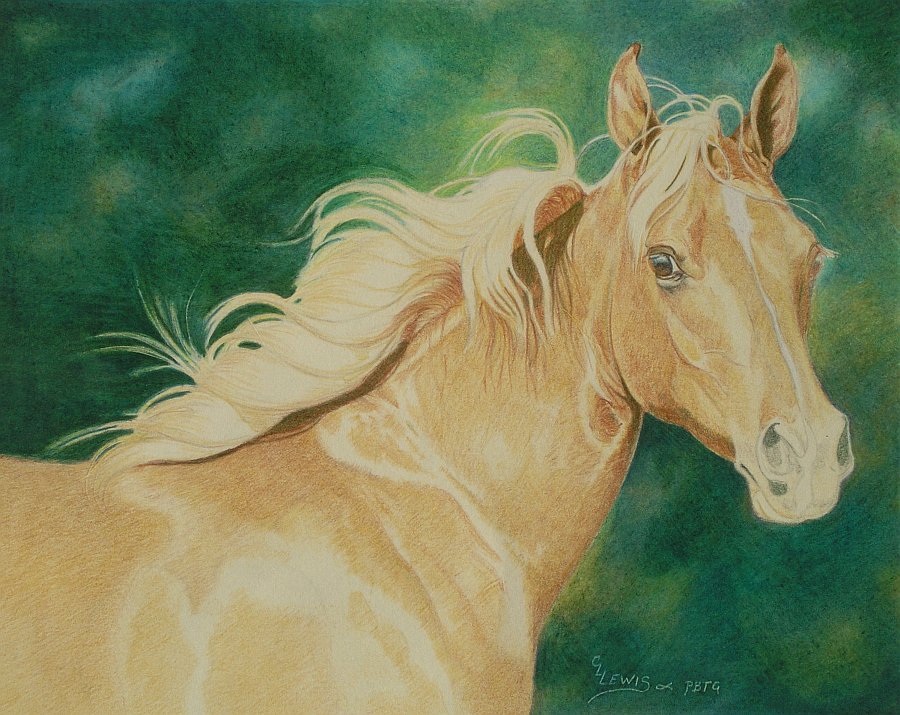
Stride fourteen
I adjacent used Dark Dark-green to darken the darkest shadows in the ears, under the caput, and beneath the mane. I also worked around the muzzle. Over again, I outlined well divers shapes and filled them in. In the remaining shapes, I added color without outlining.
I used green at this stage to add darkness to the reds and golds without making them too brassy. Any absurd color would have worked. My colors of preference are either Indigo Blue or Black Grape.
For this drawing, I chose Dark Light-green because the background is green. The colour volition not be obvious in the equus caballus, only having information technology in the mix creates color harmony.
Finally, I layered Dark Umber over the same areas and along the bottom of the lower neck to warm upward those cool greens.
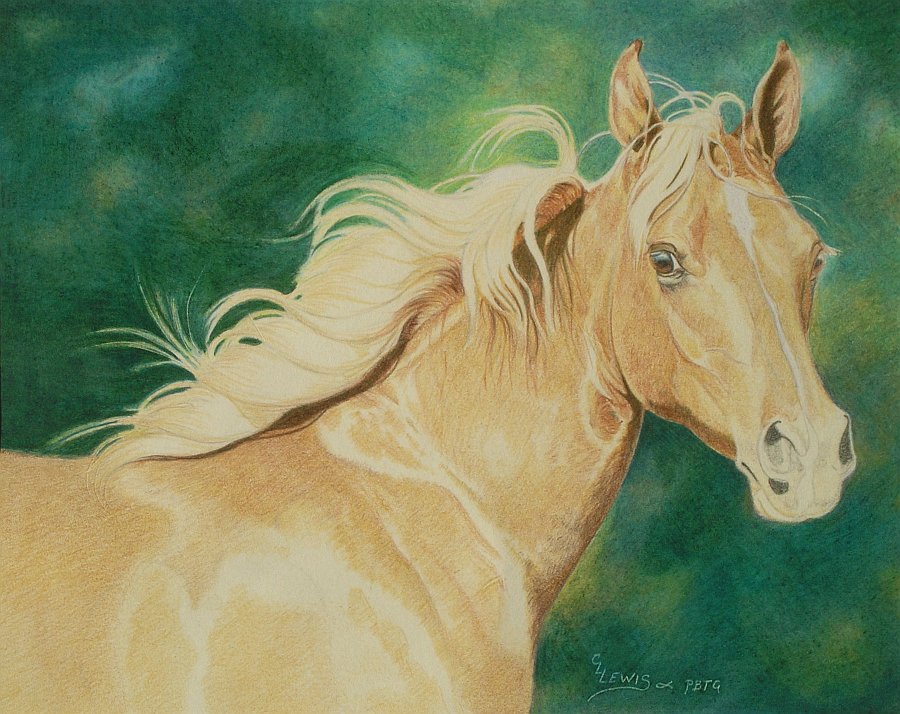
Back to The Equus caballus
The final phase of this tutorial on How to Draw a Equus caballus with Colored Pencils now begins; deepening color and saturation, broadening values, and edifice details on previous work. If I've washed things right, this is the fun part!
To begin, I layered Yellow Ochre over most of the horse. The only areas I worked around were the bright highlights on the head and shoulder, the white blaze, and the strands of hair overlapping the brow and neck.
I used the side of a very abrupt pencil and light to medium pressure for most of this piece of work, matching pressure level to value. Light pressure in lighter value areas; heavier pressure in the darker areas.
Right now, the goal is to layer color to build saturation, colour, and value. I don't know how many layers that will take, so I keep pressure light. This preserves the molar of the paper as long equally possible.
When working around the highlights, I used the point of the pencil and directional strokes to create softer edges.
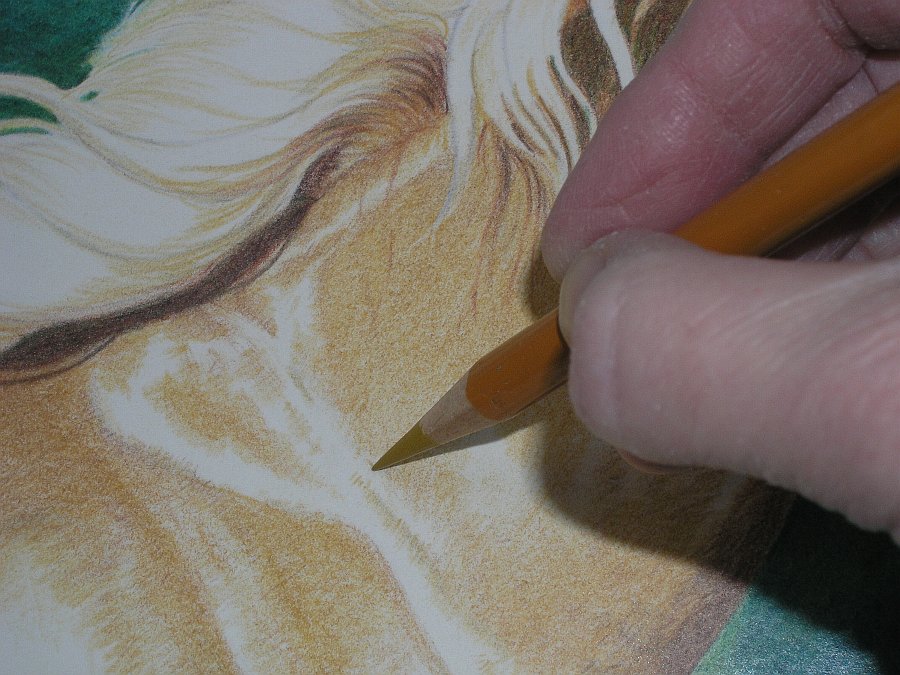
I also worked on the mane and forelock, adding warm centre tones to some areas and glazing Yellowish Ochre over the darker shadows.
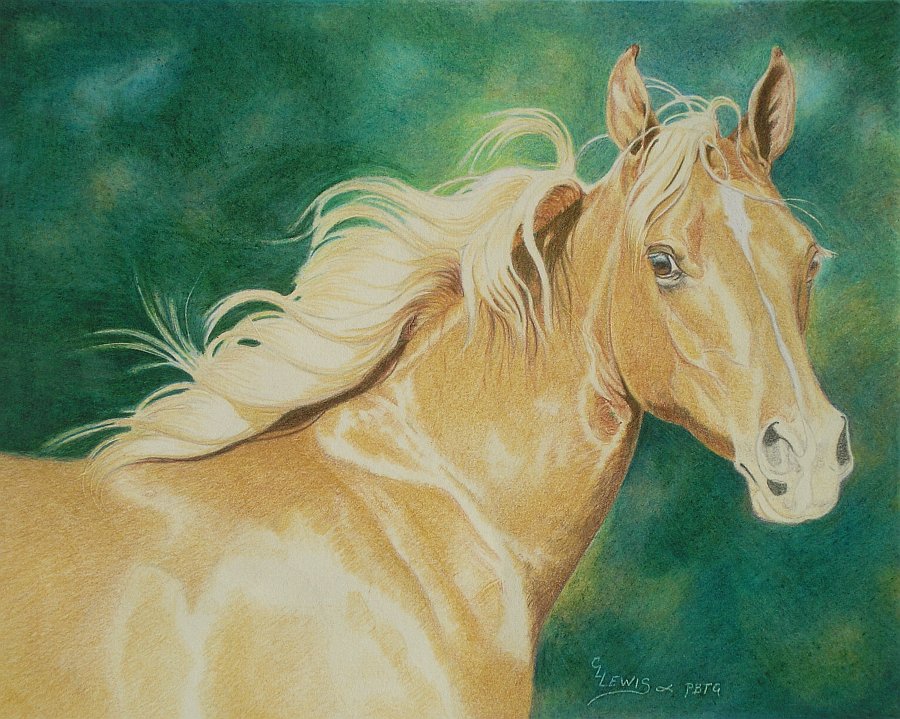
Using very light strokes and working in the direction of hair growth, I layered Mediterranean Blue over the filly's coat. I besides stroked information technology into the mane in the shadowed areas using long strokes, and added a very light glaze to the muzzle and within the ears using a blunt tip and tight, circular strokes.
Next, I layered Sienna Brown into the aforementioned areas using the same pressure and strokes.
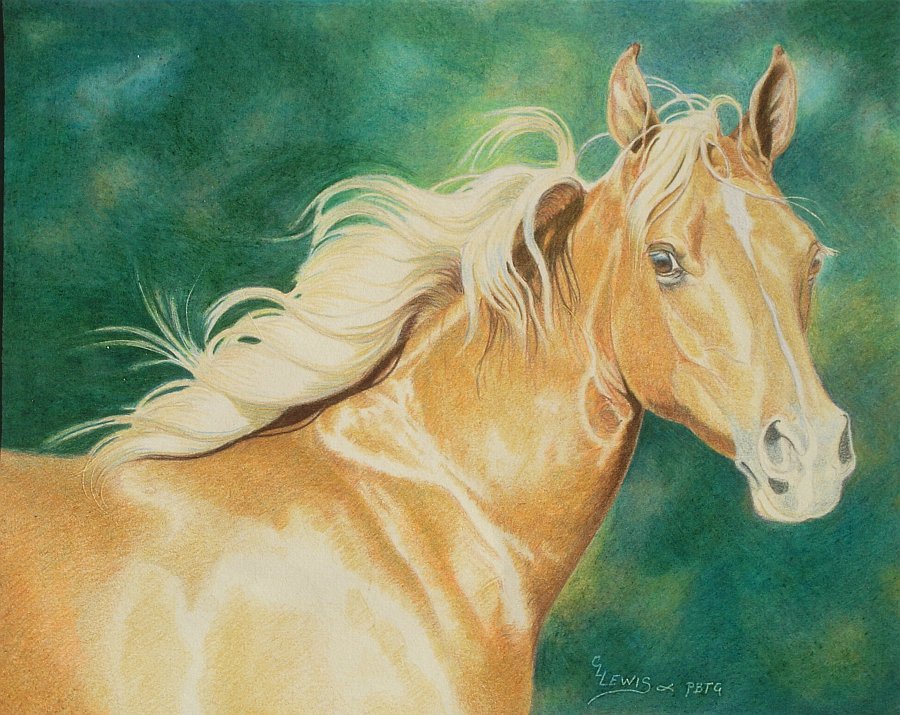
Finally, I darkened the darkest shadows under the mane, along the throat and inside the ears with Dark Umber, which I practical with heavy pressure (not quite burnishing).
Finishing Touches
Almost done with this tutorial on How to Draw a Horse with Colored Pencils. Hang in there!
Using light to medium pressure, I layered Burnt Ochre over the dark middle tones throughout the filly, starting time with her body and working my way forward and upwards.
I sharpened the pencil frequently and used a abrupt tip to create the texture of pilus and to work around some of the highlights. Simply I also used a more than edgeless tip to lay down even layers of color with niggling or no visible pencil strokes wherever necessary.
In the mane and forelock, I kept the pencil abrupt and used the tip to darken the middle tones and shadows and brainstorm defining pilus masses.
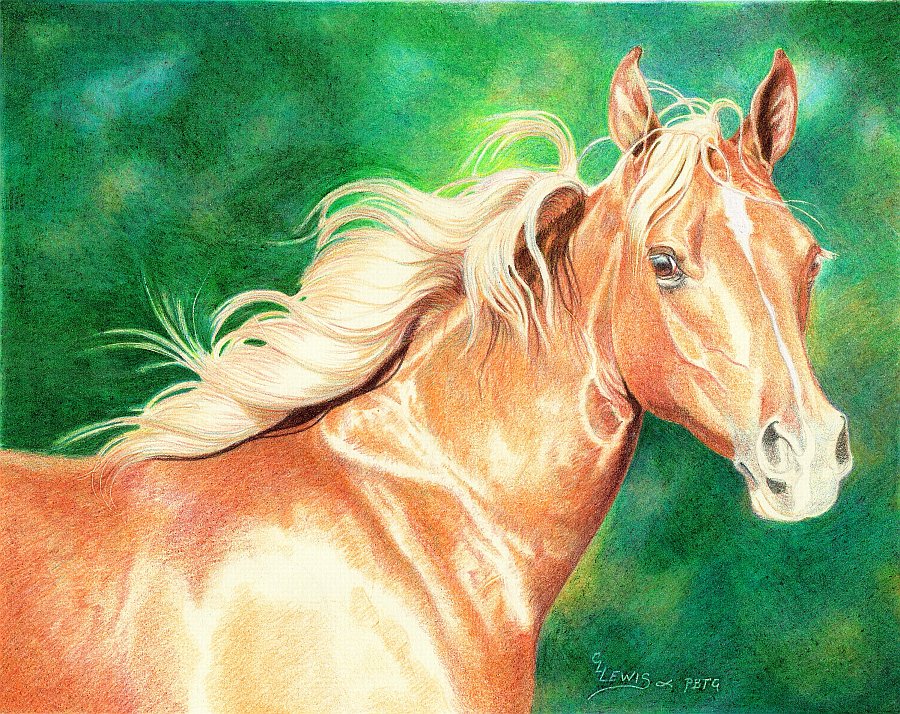
Next, I layered Goldenrod over all of the same areas and into the highlights over the shoulder and forth the cervix, where they are not quite equally bright. I used light to medium light force per unit area and a variety of strokes ranging from brusque, directional strokes with a sharp pencil to broad strokes using the side of the pencil and following the contours of muscle and trunk.
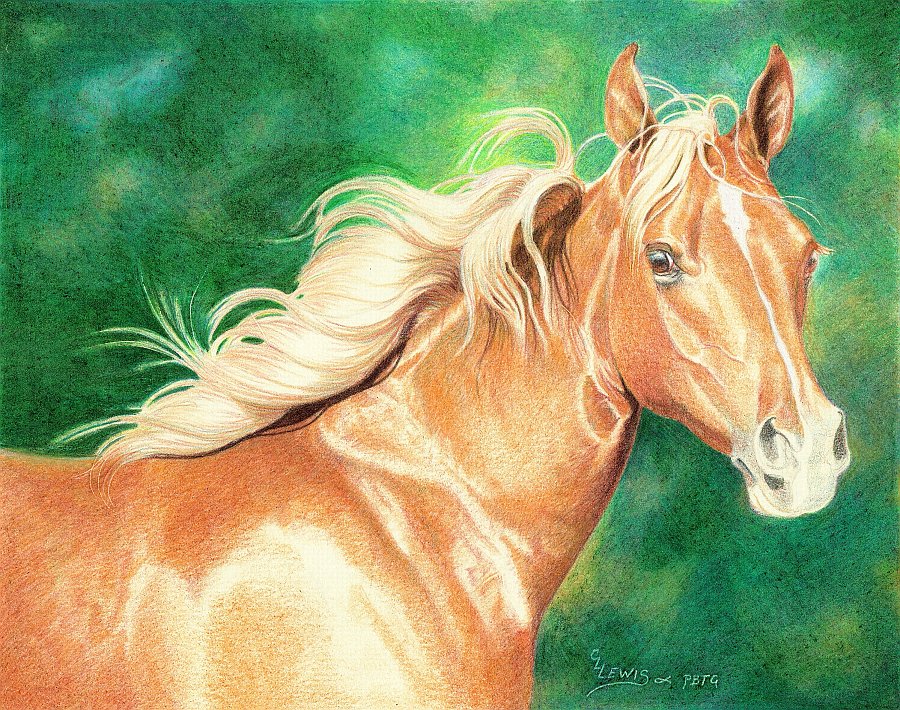
I used French Grey 20%, l% and 70%; Blush and Calorie-free Blush; Dark Brownish, Indigo Blue, Light Umber, Black, Deject Bluish, and White. I worked out the details of shadows and highlights, the shapes of nostrils and mouth, and the markings. Once the shapes were established, I alternated layers of colour with burnishing. Virtually of the burnishing was done with White. The shadows were burnished with Light Umber or French Grey 70%, then glazed with black.
I as well worked the groundwork around the muzzle, softening, and manipulating edges.
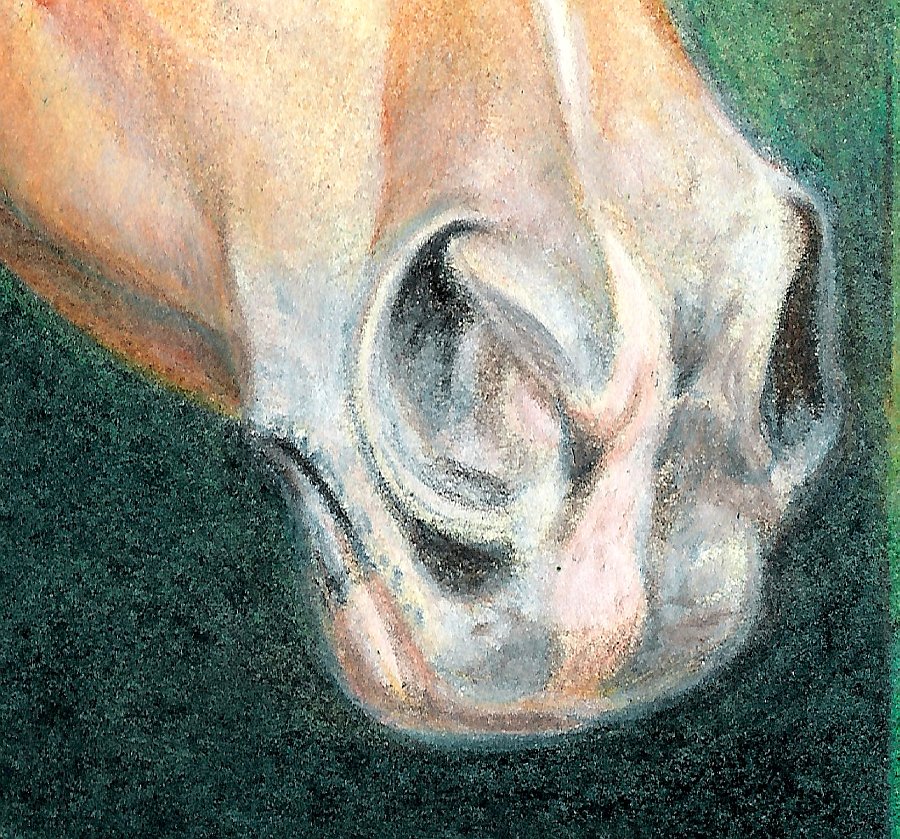
I used the same basic method – layer, burnish, layer, burnish – to work up into the face. For this part of the work, my fistful of pencils included White, Cream, Sand, Yellow Ochre, Pumpkin Orangish, Mineral Orangish, Calorie-free Umber, the French Greys, Deject Blue, and Blackness. Since I'd already put a lot of work into this part of the portrait, my attending was given to smoothing out color, punching up highlights and fine-tuning details.
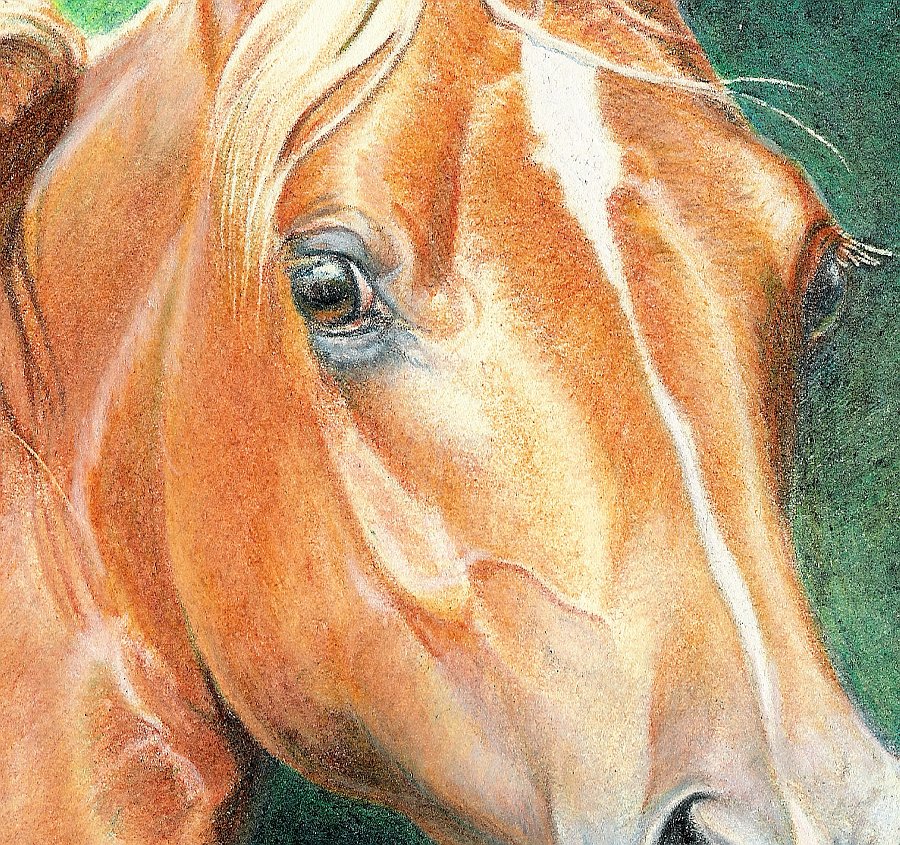
I used the same colors to do the ears, which proved to be the most hard function of the portrait.
The forelock was detailed with touches of Sienna Brown, Yellowish Ochre, Indigo Blue and Dark Brown Layered and White in the highlights.
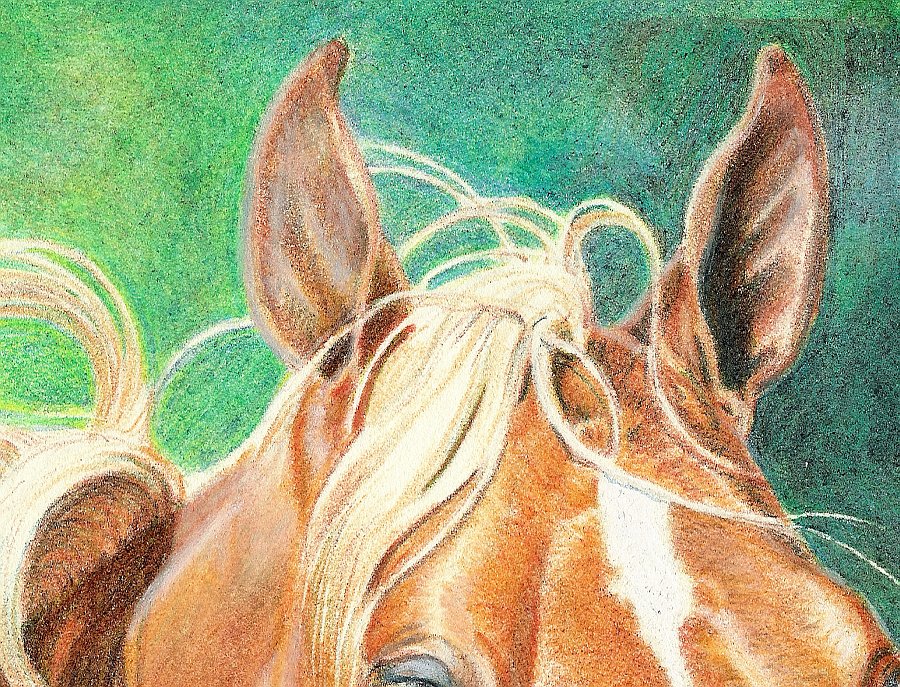
I used the same colors I used in the face up to end the neck and shoulders. I concentrated on getting the highlights, centre tones, and shadows right, and so burnished with Cloud Blue in the reflected light areas, Sand in the middle tones, and White and/or Cream in the highlights. In some areas, I used a colorless blender, but I much adopt the look of color burnished with color.
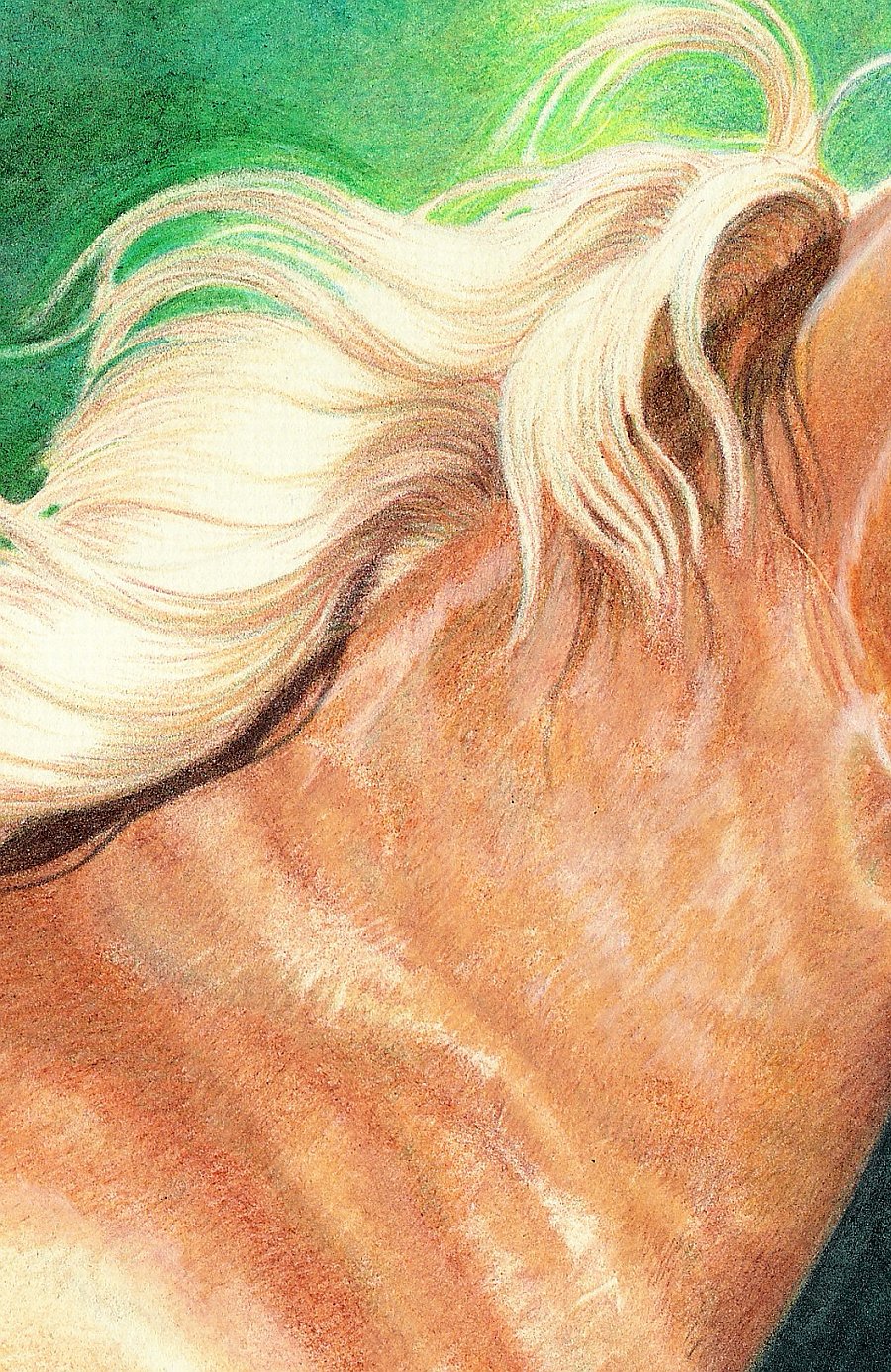
I used the same combination of colors and the same layer-burnish procedure to finish the neck, the shoulder, and the torso.
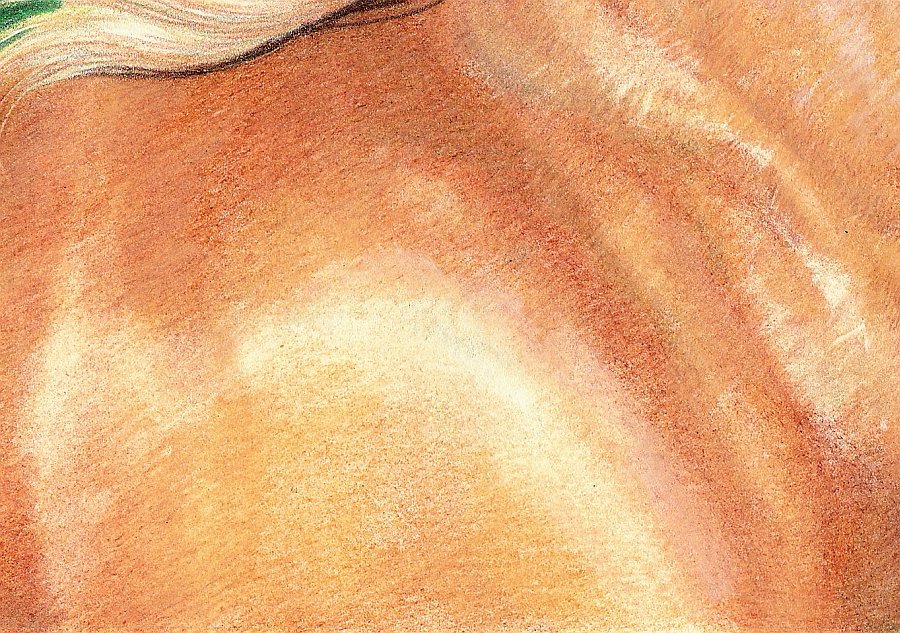
At this betoken, it'south all a thing of examining the painting from edge to border, cleaning upwardly edges, smoothing out color, and making whatsoever other adjustments need to exist made.
This is the finished portrait.
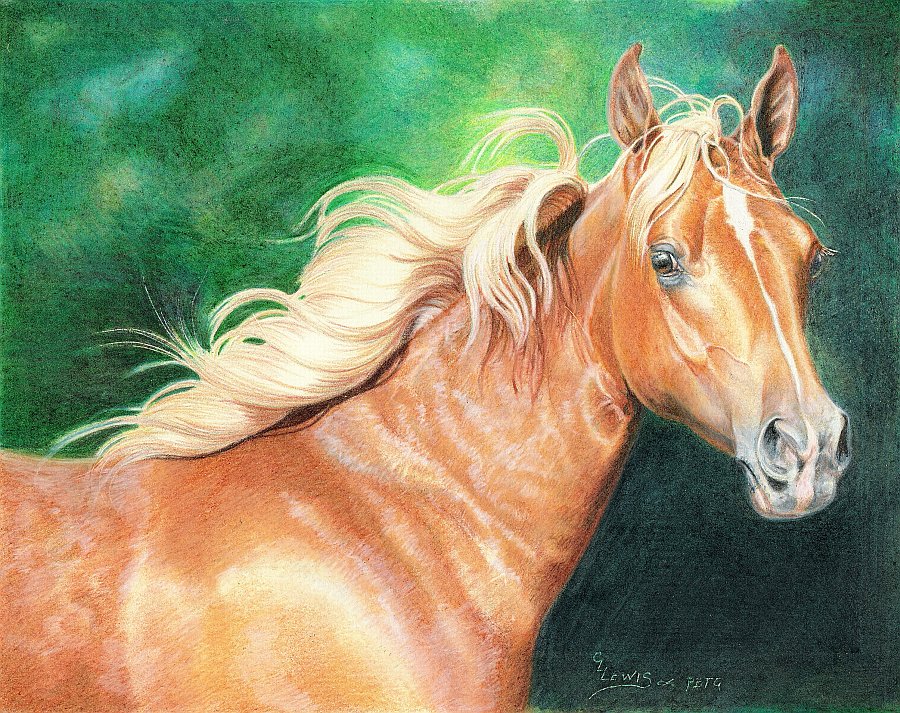
If you enjoyed this demonstration, you might besides bask Carrie'due south book, Colored Pencils: The Directly Method Step-by-Step. The book is available for Kindle at Amazon.
Prints, Greeting Cards, cell phone covers of this image are bachelor through Fine Art America
I hope you enjoyed this step by step lesson on How to Depict a Horse with Colored Pencils. Observe more than colored pencil lessons from our site here.
About the Creative person
Carrie L. Lewis has been drawing and painting for over 35 years. Her involvement in art began very early, with parents providing crayons and newspaper. She sold her first horse portrait at the age of seventeen and has been painting beautifully detailed portraits of horses for clients all over the U.s.a. e'er since.
Her oil painting technique draws from the work Johannes Vermeer (1632-1675) and William Bouguereau (1825-1905). In addition to borrowing their techniques, she uses as many classical materials as possible, including all-time possible oil paints.
Carrie also works in colored pencil using many of the same techniques used for oil painting.
Carrie has participated in exhibits in such locations equally Lone Star Park Race Rail, K Prairie, Texas and Remington Park Race Rails, Oklahoma City, Oklahoma. In 2003, she participated in Village Place, a one-time show in Louisville, Kentucky during Kentucky Derby weekend.
Since the early 90s, she has worked with the Michigan Harness Horseman's Association, donating custom portraits to their annual benefit sale. Monies raised during this almanac art auction help fund a scholarship for the son or daughter of a member horseman.
In 2007, Carrie'south painting, "A New Day", was short listed in the Shadwell Estates Ltd. 2007-08 Stallion Brochure Competition.
"I have always loved horses. Information technology is a joy born within, placed deep inside by God above.
"Classical fine art has been a honey since my kickoff meet with information technology. The works of such Great Masters as Rembrandt, Vermeer and Bouguereau have the ability to stir the soul and inspire my ain creativity similar no other art form.
"I suppose, given those two passions, it was natural that I should somewhen learn and adapt the techniques of those Old Masters to my own attempts at capturing the spirit of the horse in oils."
Carrie'due south art instruction books are every bit detailed as her artwork. Her goal is to pass on her dear for art and for cartoon horses and the mural to others.
Visit Carrie's website at Carrie 50. Lewis Equus caballus Painter

Source: https://www.artinstructionblog.com/how-to-draw-a-horse-with-colored-pencils
Posted by: wiedmanmillopeat1966.blogspot.com
0 Response to "How To Draw A Horses Eye"
Post a Comment